
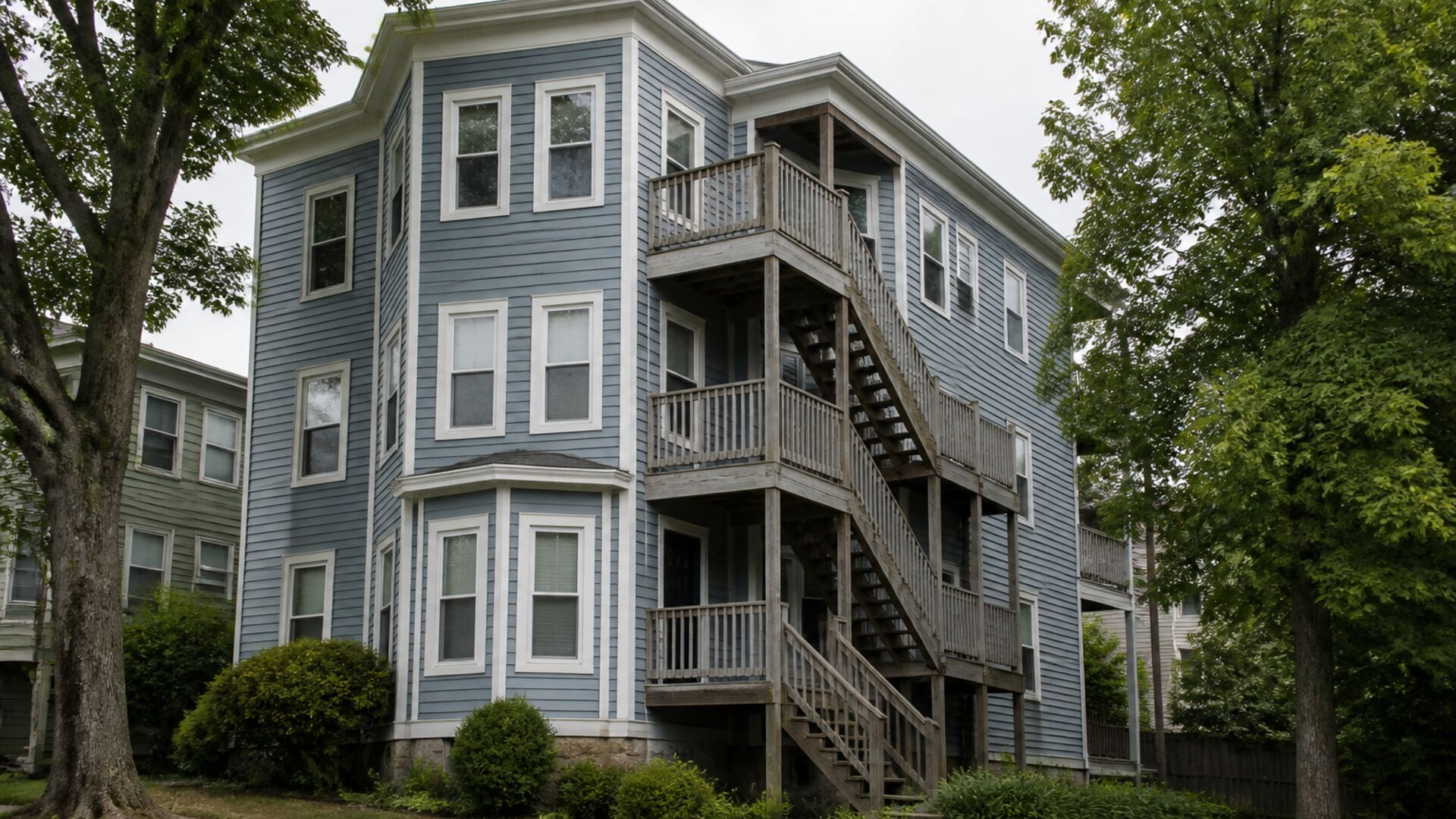
Stairs · Elevators · Deposits
Apartment Moving Guide for Vermont, VT Renters
The expensive part of an apartment move is almost never your furniture. It is the wall you scraped on the way out.
Protect the Building
Why Deposits Are Lost on the Way Out, Not Inside
Landlords deduct for damage to common areas far more often than for anything inside the unit.
The Short Version
- Pad banisters and jambs before lifting
- Reserve the freight elevator early
- Get the COI to the office in advance
- Measure the sofa against the turn
- Photograph the empty unit
- Haul what you're leaving behind
Almost every deposit dispute we hear about comes down to the same short list: a scraped banister, a gouged door jamb, a scuffed stairwell wall, or a couch left in the basement. None of that is about the quality of your furniture. It is about the fifteen minutes of protection that either went down before the first lift or did not.
So the first things off a truck on an apartment job should be corner guards, runners for the treads, and pads on anything a dresser is going to swing near. That is not fussiness — it is the cheapest insurance available on the entire move.
Before Move Day: The Paperwork
- Certificate of insurance. Most managed buildings require one, often naming the property as additional insured. Ask your building for the exact requirements and send them to your mover a week ahead.
- Elevator reservation. Freight elevators are booked, not first-come. Some buildings also require a deposit and restrict move hours.
- Loading zone or permit. In Burlington, Albany, or Manchester, a temporary permit is often cheaper than the ticket.
- Move-out inspection time. Book it, and know what the landlord expects the unit to look like.
The Physical Part
Stairs, Turns, and Things That Do Not Fit
Old New England buildings were not designed around modern sectionals, and some things genuinely will not go.
Each flight of stairs roughly doubles the carry time for large items. A third-floor walk-up is therefore not twice a ground-floor move — it is closer to three times, and any quote that does not account for flights explicitly is a quote that will change.
The bigger issue is geometry. Older triple-deckers and converted Victorians frequently have a landing turn that will not accept a long piece at any angle. When something will not fit, the real options are: remove the feet and the door slab, stand it vertically and pivot, disassemble it, or hoist it through a window opening. A crew should tell you which one before anything is wedged in a stairwell.
Measure These Four Things
- The narrowest doorway on the route, including its depth.
- The stairwell width and the diagonal at the tightest landing.
- The elevator interior — depth, width, and door height.
- The longest dimension of your largest piece, diagonally.
Getting the Deposit Back
Once the unit is empty, the deposit is decided by two things: whether the place is clean to inspection standard, and whether anything was left behind. Ovens and refrigerators are the two most-charged items on any move-out statement, and they are also the two most often skipped by someone exhausted at the end of a long day.
Photograph every room once it is empty and swept — floors, appliances, inside cabinets, and the bathroom. That record costs nothing and settles a disputed deduction in about one email.
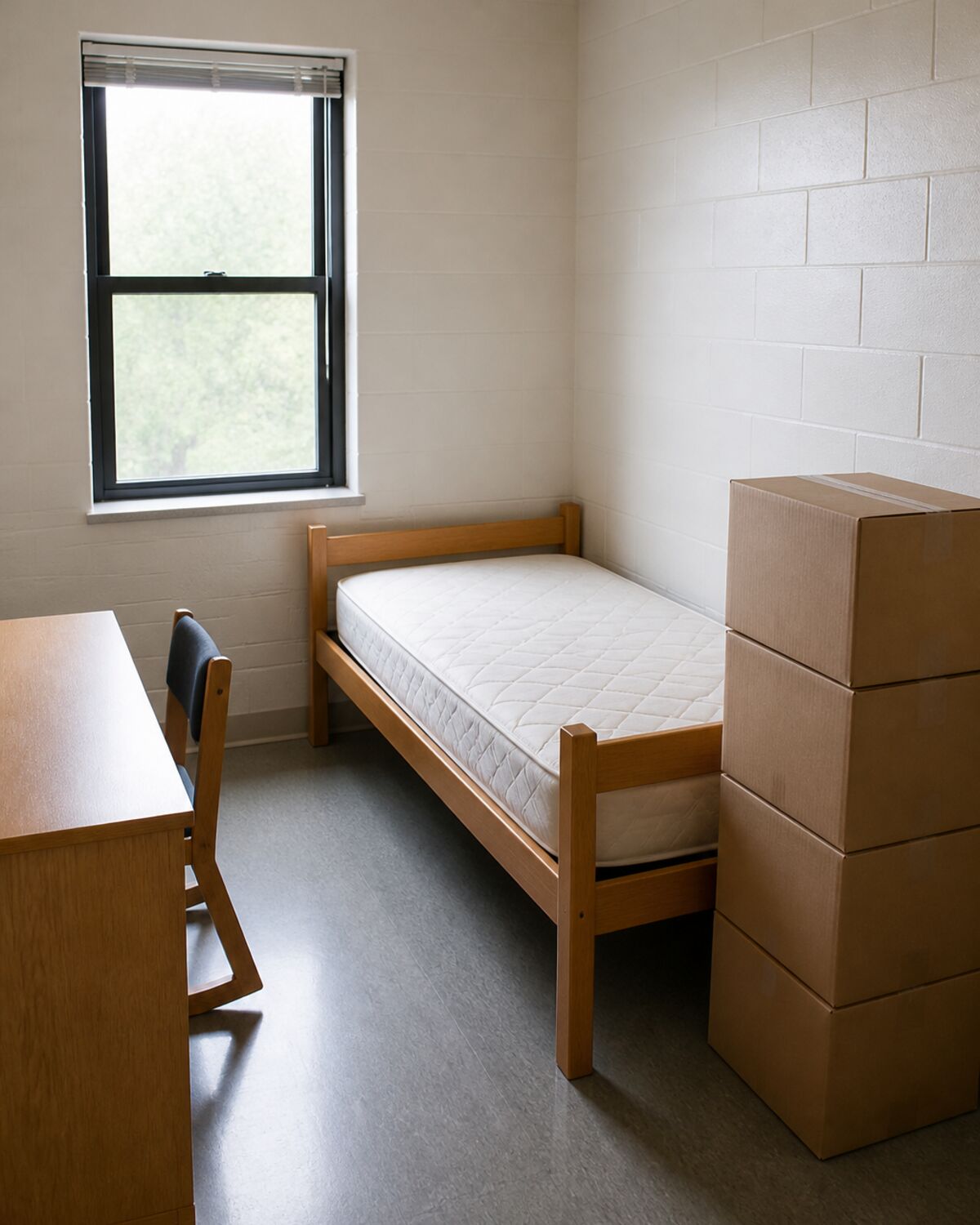
Deposit Killers
What Landlords Actually Charge Renters For
Five line items that appear on move-out statements over and over again.
-
Damage to Common Areas
One scraped railing costs more than the hour it would have taken to pad it.
-
Items Left Behind
A single broken bookshelf in the basement can trigger a full haul-away charge.
-
The Oven and the Fridge
The most-deducted items on any inspection, and the most commonly skipped.
-
Unreserved Elevator Time
The freight car gets taken by someone else and the crew waits on your clock.
-
No Photos of the Empty Unit
Without a record, a disputed deduction becomes your word against theirs.
Building Types
Apartment Buildings Across Our Service Area
Six building types we work in constantly, and what each one demands.
Triple-Deckers
Exterior back stairs are frequently faster and safer than the interior run.
Converted Victorians
Rutland and Bennington units carved from single-family homes have awkward turns.
Mill Lofts
Winooski and Manchester conversions have freight elevators and strict windows.
Student Housing
Hanover and Burlington move weekends are fixed dates nobody can shift.
Winter Entryways
Storm doors and iced exterior stairs decide which door gets used in January.
Managed Properties
Insurance certificates and elevator deposits are paperwork, handled in advance.
Renter FAQs
Apartment Moving Questions From Renters
It is proof your mover carries liability coverage, often with the property named as additional insured. Managed buildings require it so they are covered if a crew damages a common area. Ask the office for their exact wording and pass it to your mover about a week ahead.
Keep Reading
More Moving Guides
Keep the Deposit
Moving Out of an Apartment This Month?
Send us the floor and the building rules. We'll handle the certificate and the elevator.
Apartment Quote
Request an Apartment Moving Quote
Floor, elevator, and any building insurance requirements is what we need to price it.
Hours of Operation
- Monday Open 24 Hours
- Tuesday Open 24 Hours
- Wednesday Open 24 Hours
- Thursday Open 24 Hours
- Friday Open 24 Hours
- Saturday Open 24 Hours
- Sunday Open 24 Hours
Request a Free Quote
Tell us what's going on — we'll reply fast during business hours.